


WELCOME TO FOWLER


Life At Its Best!
Yes... We are a small community, made up of the best neighbors you could ever hope to have. If you dream of a small town lifestyle... explore Fowler as a place for you to call home.
Strong Local Businesses
We have a number of strong locally owned and operated businesses that serve our community, region and far beyond. A great place to start, own and operate a business.
International Business
We never set limits on what possibilities actually do exist. We are blessed to have attracted the attention of some exceptional international partners that have created excellent jobs and other opportunities for our community.
Important Info
for FOWLER Residents
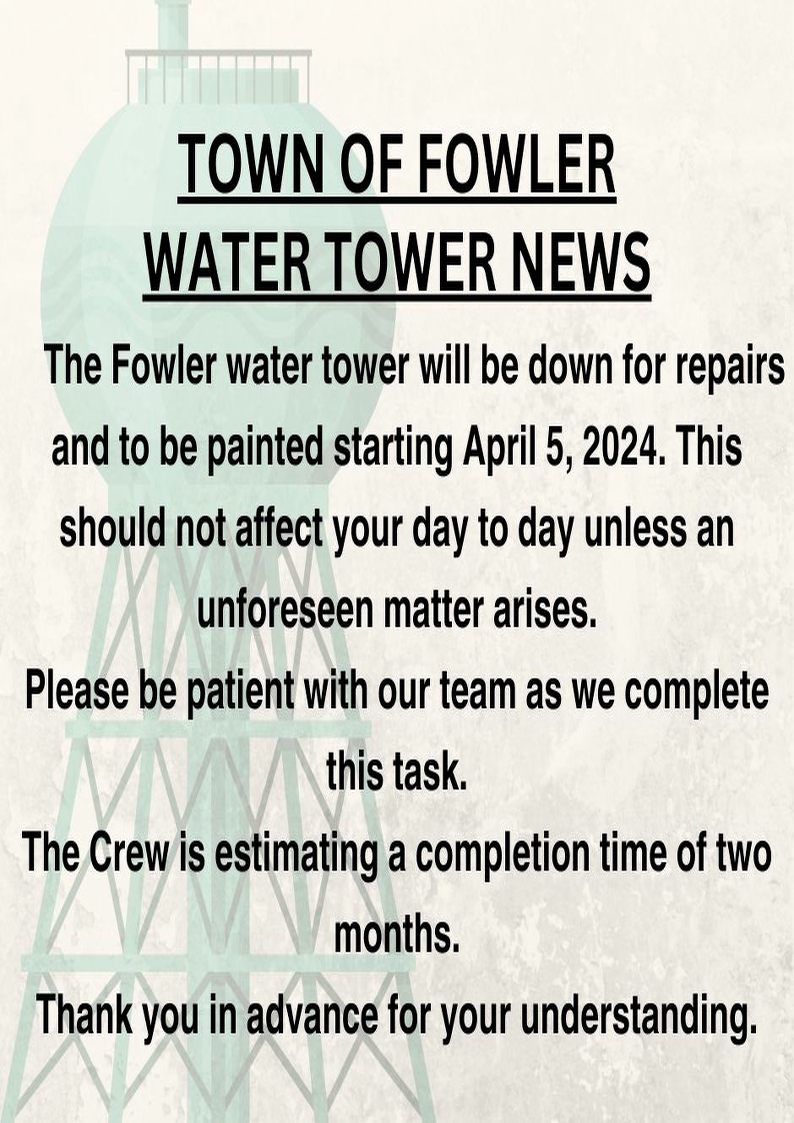


Residential Heavy Trash Service
Click image to enlarge and download
ABOUT US

You will see in our community a growing, involved population; and a quality of life second to none. We invite you to experience our community's hopes and aspirations and share your own as well.
With a sense of purpose, striving for progress and community pride, we welcome you to the Town of Fowler!

1875
2317
503
Year Established
Excellent Neighbors
Windmills
1
Great Place to Live
BEST NEIGHBORS AROUND


OUR LOCAL PARTNERS


Chamber of Commerce


Economic Development


Community Foundation


Tri-Kappa

